Does Walking Help Your Heart? Why Small Habits Matter
Walking helps your heart because it is one of the simplest, most accessible, and most sustainable forms of movement. You do not need to begin with complicated workouts: cardiovascular prevention often starts with everyday habits repeated consistently.

Does walking help your heart? Yes. For many people, walking is an excellent place to start when caring for cardiovascular health. It is moderate aerobic activity, can be adapted to your fitness level, and requires no special equipment. Each step engages large muscle groups, gradually raises your heart rate, and stimulates circulation. The heart works to deliver oxygen to the muscles and, over time, regular activity can help improve the body’s ability to sustain effort. There is another important point: walking also helps you listen to your body more closely. Your heartbeat changes during movement, recovery, and rest. Learning to notice these changes without becoming alarmed can be a first step toward more informed prevention.
The key point
Walking is not a treatment and does not replace a medical checkup. It is, however, a practical small habit that can support heart health, especially when it is part of a more active and regular lifestyle.
Does walking really help your heart?
Walking is a form of aerobic activity. It engages the cardiovascular and respiratory systems, making the heart, lungs, and muscles work together. During a brisk walk, your heart rate naturally increases. This is not necessarily a negative sign: the heart is responding to the body’s demand for energy. When the activity matches your current ability, this is a normal physiological response. One of walking’s greatest advantages is that it is sustainable. Many people find it difficult to maintain programs that are too rigid or intense. Walking can fit into the day without disrupting it: walk to run an errand, take a stroll after lunch, get off public transportation one stop earlier, or use the stairs when possible. Over time, these choices can reduce sedentary time, improve general fitness, and strengthen awareness of your body.
Prevention does not come only from major changes. It often begins with a simple habit that we can genuinely repeat.
What happens to your heartbeat when you walk?
When you start walking, your muscles need more oxygen. To meet that demand, the heart beats faster and pumps blood more forcefully. You may notice a faster or more pronounced heartbeat, especially if you have been sedentary, are walking uphill, pick up the pace, or have not slept well. During a moderate walk, you should usually still be able to speak, although you may breathe a little harder than at rest. If you are completely out of breath, have pain, feel dizzy, or experience strong pressure or tightness, stop and assess the situation.
| Stage | What may happen to your heartbeat | What to observe |
|---|---|---|
| Start of the walk | Your heartbeat increases gradually | Whether the increase is progressive and proportionate to the effort |
| Brisk pace | The heart works harder to support movement | Whether you can still speak without excessive breathlessness |
| Hills or stairs | Your heartbeat may rise more quickly | Whether it begins to recover when you slow down or stop |
| Recovery | Your heart rate should gradually decrease | Whether your heartbeat remains very fast or symptoms appear |
| Rest after walking | Your heartbeat returns toward its usual level | Whether you have palpitations, pain, dizziness, or severe shortness of breath |
Observing your heartbeat during and after activity does not mean monitoring it obsessively. It means learning to distinguish a normal response to exertion from signs that deserve attention.
The cardiovascular benefits of walking
Walking regularly can support several aspects of heart health. The benefit does not come from one walk, but from consistency over time. Possible advantages include:
- less sedentary time: breaking up long periods of sitting is already an important step;
- better aerobic capacity: the body gradually becomes better able to sustain effort;
- support for weight management: walking can contribute to daily energy expenditure;
- a positive effect on metabolism: regular movement can help the body manage energy and blood sugar more effectively;
- mental well-being: walking can help release tension and stress;
- greater body awareness: movement, breathing, and heartbeat become easier to observe.
Walking also helps because it lowers the barrier to getting started. People who have not exercised for a long time often feel discouraged by the idea of “working out.” Walking is simpler: begin with a few minutes and then increase gradually.
A sustainable habit
The best physical activity is not always the most intense. It is the activity you can maintain consistently and adapt to your life and your condition.
How much should you walk to support your heart?
A practical target for many adults is to reach at least 150 minutes of moderate physical activity per week. In everyday terms, that can mean about 30 minutes a day, 5 days a week. This does not mean that anything below that amount is useless. For someone who is sedentary, even 10 minutes of walking can be an important beginning. The first goal should not be perfection; it should be consistency. A reasonable progression might look like this:
| Week | Practical goal | Note |
|---|---|---|
| Week 1 | 10 minutes a day | Walk at an easy pace without pushing yourself |
| Week 2 | 15 minutes a day | Increase only when you feel well |
| Week 3 | 20 minutes a day | Try to maintain a slightly brisker pace |
| Week 4 | 30 minutes on 5 days | A goal close to general recommendations |
Anyone with known heart disease, symptoms, uncontrolled blood pressure, or other risk factors should ask a doctor for personalized advice before increasing exertion.
What pace should you walk at?
For heart health, the most useful walk is not necessarily an extremely slow stroll, but moderate-intensity walking that matches your condition. A simple guide is the talk test: during moderate activity, you should be able to talk but not sing comfortably. If you cannot say a sentence without stopping to breathe, you are probably going too fast for your current level. The right pace depends on:
- age;
- fitness level;
- body weight;
- outdoor temperature;
- the slope of the route;
- sleep and stress;
- medications or medical conditions.
You do not need to compare yourself with others. Two people can walk at the same speed and have very different heart-rate responses.

Heartbeat and recovery: why listening to your heart matters
Your heartbeat during a walk matters, but recovery also provides useful information. After you slow down or stop, your heart rate should gradually decrease. If it stays very fast for a long time, you notice unusual palpitations, or symptoms such as chest pain, difficulty breathing, dizziness, or fainting appear, do not ignore them. For many people, observing recovery can help reveal whether they are pushing too hard or whether the body is responding well to the activity.
Do not normalize important symptoms
Feeling your heart work during a walk can be normal. Chest pain, fainting, severe breathlessness, cold sweating, or sudden weakness should not simply be attributed to fatigue.
Small everyday habits that support the heart
Cardiovascular prevention works best when it does not depend on willpower alone. It needs to become part of your routine. Here are some simple habits:
- take a 10-minute walk after lunch or dinner;
- get off public transportation one stop earlier;
- park a little farther away;
- walk while you are on a phone call;
- use the stairs when possible;
- break up long periods of sitting with active pauses;
- schedule a regular walk at the same time each day;
- walk with someone to make the habit more enjoyable;
- choose safe, realistic routes;
- focus first on consistency rather than distance.
The key is to make movement easy to repeat. A short walk done often is more useful than one major effort that is never repeated.
For the heart, consistency matters more than occasional intensity.
Who should take extra care before starting?
For many people, walking is safe and accessible. Some situations, however, require more caution. Ask a doctor before increasing physical activity if:
- you already have a heart diagnosis;
- you have experienced chest pain or discomfort;
- you have very high, uncontrolled blood pressure;
- you have fainted or had significant dizziness;
- you have frequent palpitations or an irregular heartbeat;
- you have unusual shortness of breath;
- you have diabetes, significant obesity, or several cardiovascular risk factors;
- you have been inactive for a long time and want to begin at high intensity;
- you have specific concerns about your condition.
Do not wait when acute symptoms are present. Chest pain or pressure, difficulty breathing, pain spreading to the arm, neck, jaw, or back, cold sweating, nausea, severe weakness, or fainting require immediate assistance.
In case of important symptoms
Do not take a walk, rest, or use an app to “see whether it passes.” If symptoms could indicate an acute problem, call 112 or your local emergency services immediately.
How Easy Heart Check can help you listen to your heartbeat more closely
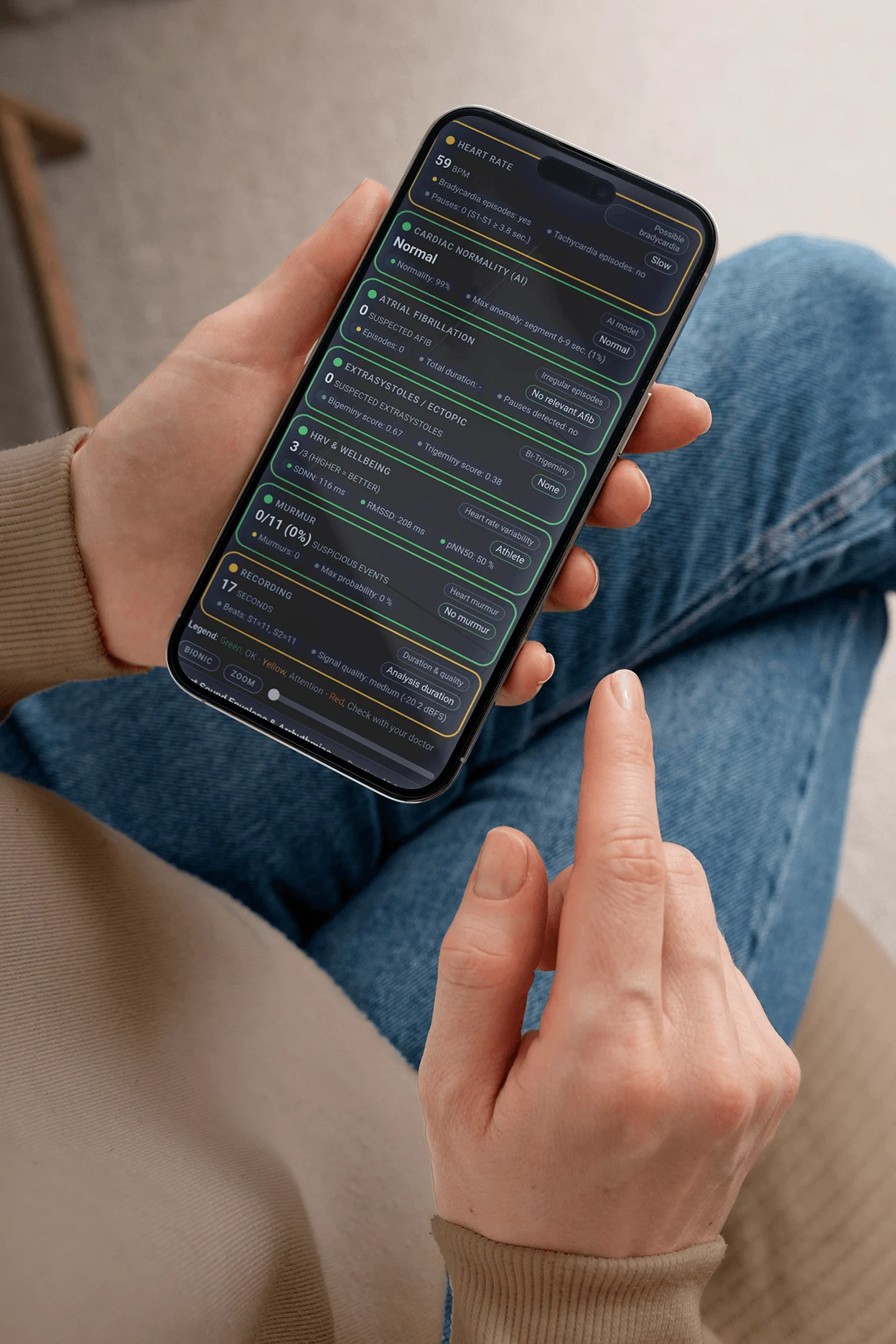
Walking is a healthy habit, but learning to listen to your heartbeat can also make prevention more informed. After a walk, during recovery, or while resting, your heart can change its rate and intensity. Easy Heart Check is designed to help you make a guided sound recording of your heartbeat using your smartphone’s microphone. The goal is not to replace a medical visit or an ECG. The goal is to offer a simple way to observe certain heartbeat signals and save them in a report that is easier to review. For a more useful recording:
- choose a quiet environment;
- reduce background noise and conversations;
- remain still during the recording;
- follow the instructions shown by the web app;
- do not compare recordings made under very different conditions;
- do not use Easy Heart Check during acute symptoms to delay seeking help.

Support for greater awareness
Easy Heart Check does not provide diagnoses and does not replace a doctor. It can, however, help you set aside a structured moment to listen to your heartbeat and observe certain signals over time.
Listen to your heart with Easy Heart Check
Make a guided sound recording of your heartbeat using your smartphone’s microphone. No additional device and no complicated procedure.
The most common mistakes when you start walking
Starting to walk seems simple, but several common mistakes can make the habit less sustainable.
| Mistake | Why it can be a problem | A better alternative |
|---|---|---|
| Starting too hard | It increases the risk of becoming tired quickly and giving up | Start with a few minutes and increase gradually |
| Walking only when you happen to have time | The habit becomes inconsistent | Schedule simple, realistic times |
| Ignoring symptoms | It can delay a necessary evaluation | Stop and seek help when important warning signs appear |
| Looking only at numbers | Steps, distance, and BPM can create anxiety when separated from context | Also observe how you feel, recovery, breathing, and regularity |
| Comparing yourself with others | Every body responds differently | Evaluate your own progress over time |
Walking should be a supportive habit, not another source of pressure. The body improves through consistency, not by being forced to meet unrealistic goals.
Frequently asked questions
Does walking every day help your heart?
For many people, yes. Walking every day, even for short periods, helps reduce sedentary time and can support cardiovascular health. Consistency is more important than perfection.
How much should you walk each day?
A practical goal is to gradually reach about 30 minutes a day on 5 days each week. Anyone starting from zero can begin with 10 minutes and increase slowly.
Does walking lower your heart rate?
Your heartbeat naturally increases while you walk. Over time, regular activity can improve cardiovascular fitness and make the body more efficient during exertion. Resting heart rate, however, varies from person to person.
Is it better to walk slowly or quickly?
It depends on your individual condition. For many adults, moderate-intensity walking is useful: brisk enough to increase breathing and heartbeat, but not so intense that you cannot hold a conversation.
Is walking after a meal beneficial?
A light walk after meals can help some people feel more active and reduce sedentary time. It is best to avoid intense exertion immediately after a large meal, especially if you have symptoms or specific medical conditions.
Should I worry if my heart beats strongly while I walk?
An increased heartbeat during movement is normal. Stop and seek medical advice, however, if it is associated with chest pain, severe breathlessness, dizziness, fainting, sudden weakness, or unusual palpitations.
Does walking replace a cardiac checkup?
No. Walking is a helpful preventive habit, but it does not replace a medical visit, an ECG, or a clinical evaluation, especially when symptoms or cardiovascular risk factors are present.
Can Easy Heart Check be used after a walk?
It can be used at a safe, quiet time to make a guided sound recording of your heartbeat. Do not use it during acute symptoms to delay seeking help.
Does Easy Heart Check make a diagnosis?
No. Easy Heart Check supports awareness and prevention. It does not replace a doctor and does not provide a diagnosis.
Conclusion
Walking helps your heart because it is simple, accessible, and sustainable. It reduces sedentary time, stimulates the cardiovascular system, and can provide a practical foundation for a more active lifestyle. You do not need to begin with enormous goals. For many people, the first step is literally to go outside and walk for a few minutes, repeating the habit consistently. At the same time, listening to your heartbeat can help you understand how your body responds during movement, recovery, and rest. Easy Heart Check can fit into this process as a digital awareness tool through a guided sound recording of your heartbeat.
Prevention does not grow from fear. It grows from attention, consistency, and the ability to recognize your body’s signals.
Start listening to your heart more closely
With Easy Heart Check, you can make a guided sound recording of your heartbeat directly from your smartphone.
This content is provided for informational purposes only and does not replace medical advice. Easy Heart Check supports awareness and does not provide diagnoses. In case of chest pain, difficulty breathing, fainting, severe weakness, or sudden symptoms, call 112 or your local emergency services immediately.